> For the complete documentation index, see [llms.txt](https://odi.gitbook.io/core/llms.txt). Markdown versions of documentation pages are available by appending `.md` to page URLs; this page is available as [Markdown](https://odi.gitbook.io/core/basics/getting-started.md).
# Getting Started
## Installation
1. Install npm package\
`npm install odi --save`
2. Install reflect-metadata \
`npm install reflect-metadata --save`
3. Import reflect-metadata (for example in `index.ts`):\
`import "reflect-metadata";`
4. Enabled the following settings in `tsconfig.json`
```javascript
"emitDecoratorMetadata": true,
"experimentalDecorators": true
```
## Hello World application
First of all, let's create simple controller `hello.controller.ts`
```typescript
import { Controller, IController, Get } from 'odi';
@Controller()
export class HelloController extends IController {
@Get index() {
return "Hello world !";
}
}
```
And our startup file `index.ts`
```typescript
import "reflect-metadata";
import { Core } from "odi";
const port = 8080;
const sources = __dirname;
new Core({ server: { port }, sources }).listen();
```
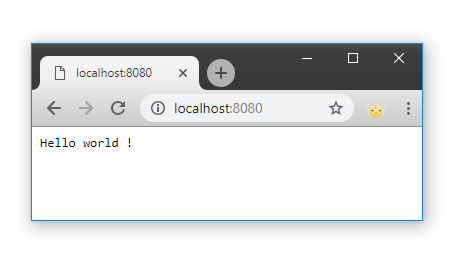
Build your application and run it `tsc && node index.js` Check it in your browser
It was just a basic example. There are many other interesting things. Check docs for further information.